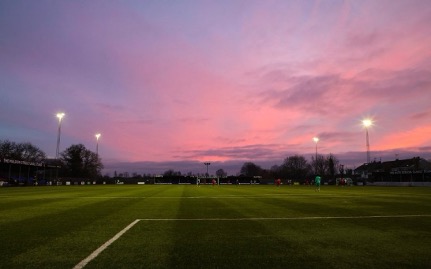
Fresh faces, renewed hope and new expectation. Despite the mid table mediocrity of last season, Heybridge Swifts are aiming high for 2025/26. Playoffs are the aim for the Swifts this season, and they have revamped their side to improve on last seasons position. Throughout this piece, I will be analysing the Swifts ahead of the new campaign, assessing their credibility as playoff contenders in a highly competitive league.
Last seasons struggles
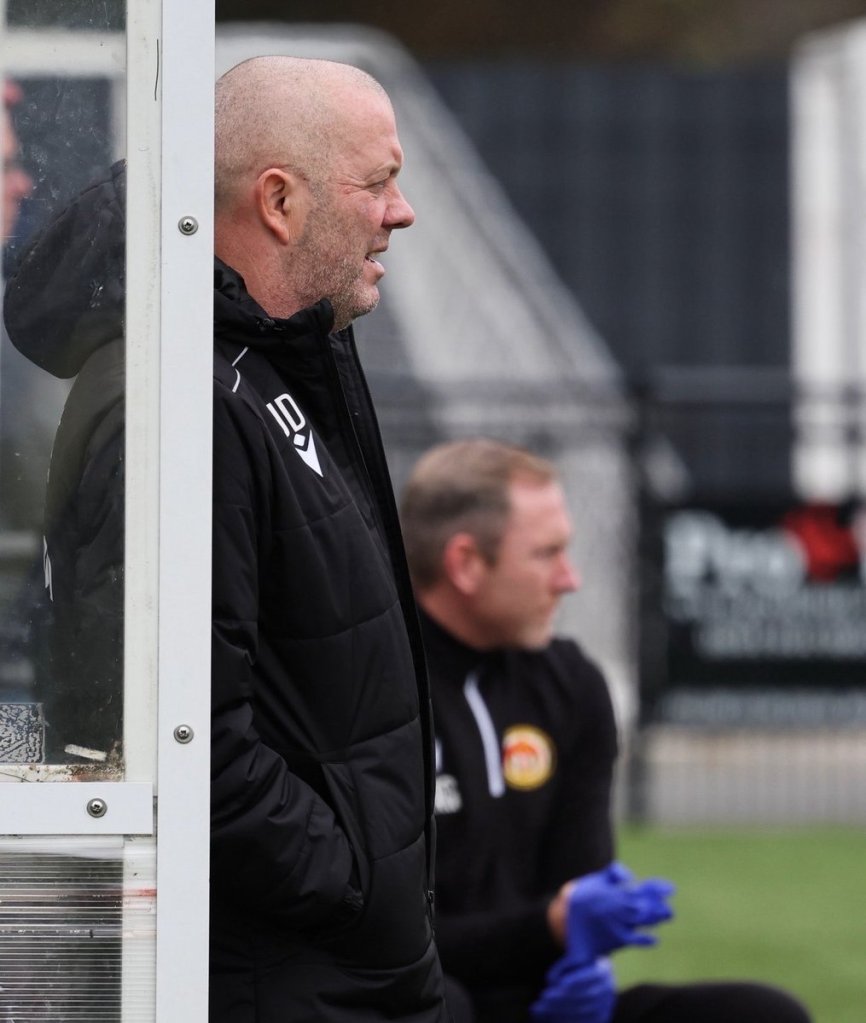
Last season offered its share of lessons. There were stretches when the Swifts looked every inch a side capable of troubling anyone in the division, the months of October- January saw the club consistently in, or just outside the playoff places. Consistency was lacking from there on in, as from the start of 2025 onwards the Swifts began to gradually fall down the league, eventually ending the season in 14th. The Swifts found themselves in 5th on Christmas day, highlighting just how much the club fell away in the second half of the season. Speaking on reflection following the conclusion of the season, chairman Steve Spreadbury said “I think ultimately, we just lacked that little bit of experience when times got tough. We spiralled a bit when we lost one, we eventually lost 2 or 3 more in a row. That’s something we will need to change next year if we want to compete a bit more”. Despite a few rumblings around the club, Swifts have decided to stick with manager Julian Dicks for another season. Dicks too will be keen to improve quickly on the struggles at the back end of last season, to end any questions around his position as manager. So, what has changed ahead of the new campaign?
A focus on experience
The average age of last seasons most used starting 11 came to just 24 years of age, and that’s with 36-year-old midfielder Billy Crook regularly featuring to bring that average up substantially. Ahead of the new season Julian Dicks has strengthened the core of his side substantially. Dicks has leaned on his past successes at the club, bringing back 3 members of his former players from previous seasons. Swifts’ fans will have been delighted to see the return of towering defender, Myles Anderson, who returns to the club after two years away. Myles was part of Dicks’s side who reached the playoff final in 2021 before the managers departure from the club. Anderson also becomes the new club vice-captain in a revamp of the club’s leadership team. The club captain has been announced as midfielder Connor Hogan. Hogan has won promotion from the division twice before, so his experience and winning mentality will be vital if the Swifts are to be contenders for the promotion spots this season.
Julian Dicks also moved to secure the return of blistering winger Rob Harvey. Harvey has played over 100 games in the black and white of Heybridge and returns to the club with renewed ambition and hunger for success. Speaking on the return of Harvey, Dicks said “Rob is someone I have huge respect for. He works incredibly hard in not just games, but every session in training and that’s what I want from my boys. Rob gives us pace which is vital at any level of football, and I believe he will be important for us this season for sure” Harvey will form an exciting attacking partnership with non-league journeyman Tom Richardson. Richardson is yet another high-profile name signed by Dicks ahead of the 2025/26 season. Having recently securing back-to-back promotions with Aveley, Richardson is certainly no stranger to winning and knows exactly what it takes to win promotion. So, with these signings all through the door, it promises to be an exciting season for those of a Heybridge persuasion. But what is a realistic aim for this season?
What to expect from the Swifts this year
With wholesale changes through the door, it’ll be fascinating to see how this new look Swifts side shapes up for the new season. It is clear to see that the club have placed a focus on the importance and value of having experienced winners in the side if you’re looking to secure promotion. To play devil’s advocate, could the Swifts side maybe now be too overloaded with older legs that means stamina and pace may be lacking? The Isthmian North division is always an incredibly competitive league, and is usually a season that goes right down to the final game of the season. It would be naïve of Heybridge Swifts to think that they will be in the playoff spots come the end of the season. It is widely anticipated that local neighbours Maldon and Tiptree will be champions come May due to their financial resources and high-profile signings, but the rest of the league remains open and largely unpredictable.
Manager Julian Dicks spoke to me recently about his team’s chances this year in a brief interview “The league looks strong to me. It’s always a competitive league, but not always the highest quality. I think this year may be different, as from what I’ve seen there is lots of higher-level players that are coming to play in this division now. And that’s the same for us.” As the season approaches, anticipation grows. The loyal Swifts faithful will be hoping for and anticipating an exciting 9 months ahead. Swifts have rocked back in the recent days however with a long-term injury to first choice goalkeeper Callum Chafer. Chafer has been a regular in the side for the past 3 years, but the club announced that he will miss at least the first 5 months of the season. So, the Swifts have already been hit with a major injury blow before the season has got underway officially. It has been a positive preseason for the club, and the fans are eagerly awaiting the start of the campaign for the men in black and white.
NOTE TO MARKER- Dave King has approved this submission being outdated due to the original date I was due to submit.
Ahead of the season start, we caught up with new captain Conor Hogan to get his thoughts and expectations for the upcoming season.
In the 21st century, elite sport has become about far more than medals and trophies. It’s now one of the most powerful stages on which nations try to shape how the world sees them. This is where the idea of soft power comes in — a term coined by political scientist Joseph Nye to describe the ability to influence others through attraction and persuasion rather than force or money. Instead of armies or trade deals, soft power works through culture, values, and the stories a country tells about itself. Sport has become one of the most visible tools for this kind of influence. From the spectacle of the Olympics to the global pull of Football, countries are using sport to project confidence, boost their image, and gain a foothold in international politics. But has elite sport in the 21st century really learned how soft power works, or is it still playing the same old game in a new disguise?
What to expect from this piece
Throughout this piece I will be diving into all the details of the impact and presence of soft power in the modern elite sport arena. I will be looking in depth at the issues soft power can have on modern sport. Are sporting events used as a distraction from what is going on in the background? Whilst analysing the presence of soft power, I will also be looking in detail at examples of sports washing in 21st century sport. I will be using the world’s most popular sport in Football to support my research, by looking at examples within the sport of soft power and sports washing. I will now be moving onto examples of soft power and sportswashing in 21st century Football, and seeing if the elite sport arena has learnt about the dynamics of it, and look at how it is used.
Saudi Pro League- A growing competition, or a countries show of soft power?
The world of elite sport is constantly evolving and changing. Sometimes for the better, and sometimes for the worse. Elite sport in the modern world is filled with opinions, and within this piece I will be putting forward my own views. You do not have to agree with them. This is the beauty of having the right to have a view on things, it allows and encourages a discussion! For any views or questions on my piece, please contact my X/Twitter account @MGCJournalism. Anyway, onto the analysis we go! I will be looking in this section at the Saudi Pro League in the sport of Football. In the summer of 2023, global football witnessed an unexpected power shift. Cristiano Ronaldo, one of the sport’s greatest icons, signed for Al Nassr, a club in the Saudi Pro League (SPL). His arrival marked more than just another transfer — it signalled the beginning of a new era for football in the Middle East. Within months, stars like Karim Benzema, N’Golo Kanté, Neymar, and Sadio Mané followed. Once seen as the twilight destination for aging players similar to the American MLS, the SPL suddenly found itself in global headlines, its matches broadcasted all over the world. The United Kingdoms leading broadcaster Sky Sports, is broadcasting live games from the league. With the growing attention not only towards the star players in the league, but towards the set up and characteristics of the league and country of SA itself. This is an example of the SPL using soft power, remember that from earlier?
The Saudi Pro League’s rise is no accident. It’s part of Saudis vision 30, an ambitious state-led plan to diversify the economy away from oil and project the Kingdom as a global hub for business, entertainment, and sport. Backed by the Public Investment Fund (PIF), one of the world’s largest sovereign wealth funds. The SPL has received billions in investment to modernise clubs, attract talent, and boost its international profile.
Cristiano Ronaldo poses for a picture with a Saudi pro league representative- BBC Sport.
But behind the star signings and global marketing campaigns lies a deeper controversy, the accusation of sportswashing. The term, coined by human rights groups, describes how countries use sport to cleanse or improve their international image, often diverting attention from political or ethical concerns. Now, Saudi Arabia as a country is far from free of media attention and scrutiny. So it is certainly looking to improve its image. The shiny Saudi Pro League filled, with high profile stars, is perhaps only a mere distraction from the wider issues with human rights in the country itself. Footballers in the league are greeted with huge pay cheques, but have to deal with plenty of issues off the pitch. Women’s rights is a huge issue in the country, with footballers wife’s having to make lots of sacrifices to comply with the laws in the country. This poses the question regarding soft power, with the country perhaps using the league as a distraction mechanism from the outdated laws the country possesses.
Critics argue that the SPL’s transformation serves precisely this purpose. Saudi Arabia’s human rights record, particularly regarding freedom of speech, gender equality and The murder of Journalist Jamal Khashoggi in 2018, has drawn widespread condemnation. By investing heavily in sport, not only football, but also golf (via LIV Golf), boxing, and Formula 1. The Kingdom, critics say, seeks to recast itself as progressive and open, a modernising force rather than a ‘repressive regime.’
For Saudi officials, however, this narrative misses the point. They insist the investment in sport reflects genuine passion and long-term development goals (I am not overly convinced about that). Football, after all, is the country’s most popular pastime (apparently). But in the countries defence, stadiums do fill with fans, social media buzzes with club rivalries, and Saudi clubs have long been competitive in Asian competitions even before the mega money signings. “We’re not buying reputation,” said SPL Director of Football Michael Emenalo. “We’re building opportunity.”
Yet, the optics are impossible to ignore. When Ronaldo waves to fans in Riyadh, he becomes not just a footballer but a symbol of global acceptance, of legitimacy. Each goal, each broadcast, feeds into a broader narrative of a Saudi Arabia rebranding itself for the 21st century. The question is, at what cost does it do this?
Still, to dismiss the SPL purely as a public relations tool may not be completely fair and completely true . The league has improved infrastructure, created local jobs, and inspired a new generation of Saudi athletes. If it continues to grow competitively, it could genuinely reshape football’s global geography. A feat which once appeared and seemed unimaginable. If the leagues expansion continues, it could in the not so distance future challenge some of the best leagues in the world to be one of the most recognised and best quality leagues in the football empire. After all, Saudi Pro League poster boy Cristiano Ronaldo Claimed that the league is already better than Frances Ligue 1.
The Saudi Pro League stands, then, at a crossroads between transformation and tokenism. It embodies both the power of sport to unite and the power of politics to manipulate. Whether the SPL becomes a model of sporting progress, or remains a symbol of state-led image control depends not only on Saudi Arabia’s next move — but also on how the world chooses to watch the league and interact with its presence.
Qatar world cup 2022- A sporting spectacle overshadowed by the country’s issues
When the final whistle blew at Lusail Stadium and Argentina lifted the World Cup trophy in December 2022, the world watched one of football’s greatest tournaments. Lionel Messi’s crowning moment, Morocco’s historic run, and England failing yet again. However, behind the spectacle on the pitch and the spectacle’s seductive glow, the 2022 Qatar World Cup will be remembered for far more than what happened on the pitch. It was the first World Cup held in the Middle East, and arguably, the most politically charged in modern history.
From the moment Qatar was awarded the hosting rights in 2010, questions swirled around the sports media. How did a nation with no footballing tradition, a population smaller than many global cities, and sweltering desert temperatures beat established football powers in the bidding process? Allegations of corruption at FIFA and vote-buying quickly followed, allegations that eventually led to sweeping investigations and the downfall of several FIFA officials.
But as the stadiums rose from the desert sands, a more urgent issue emerged: the human cost of building them. Reports from The Guardian estimated that over 6,500 migrant workers from South Asia died in Qatar between 2010 and 2020. Though Qatari officials disputed that number. Workers, primarily from India, Nepal, and Bangladesh, toiled under extreme heat and harsh conditions, often without adequate pay or rest. Many lived in overcrowded labor camps and had their passports confiscated under the now-infamous Kafala system, which tied workers’ legal status to their employers.
In the lead-up to the tournament, Qatar implemented several reforms, including the Rafaela and the introduction of a minimum wage. Yet, human rights organisations like Amnesty International argued that these reforms were inconsistently enforced and came too late for thousands who had already suffered. For many observers, the glittering stadiums and luxury hotels were built on a foundation of exploitation.
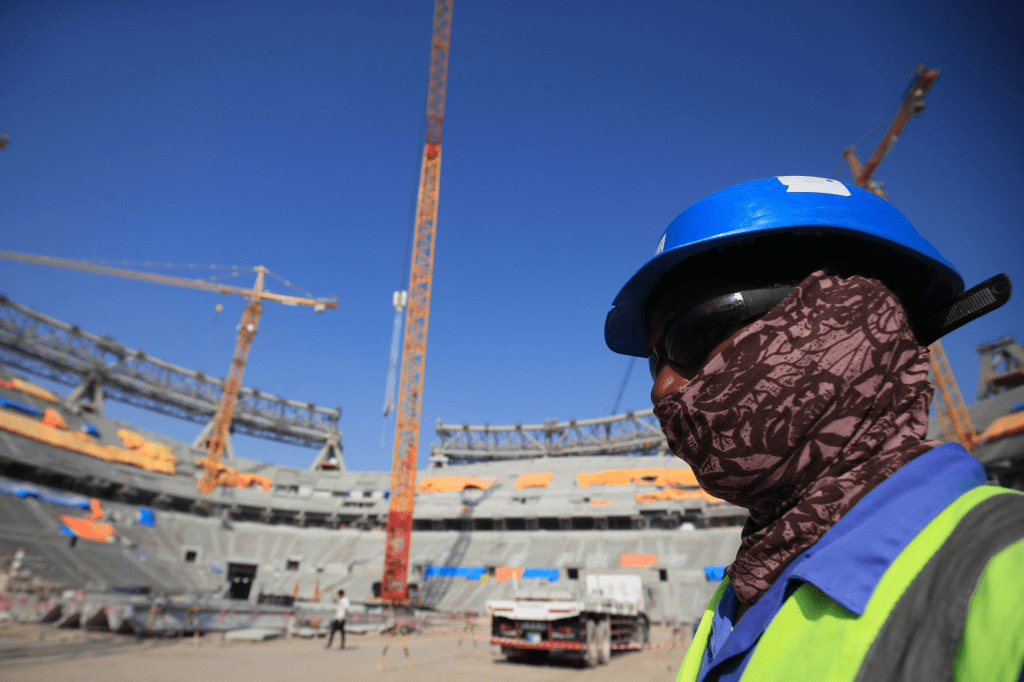
A migrant worker covers his mouth and nose from the dust when building a world cup stadium- The Times.
The World Cup was not just about football. It was about soft power. The country strategically used culture, media, and sport to shape global perceptions. For Qatar, the tournament was an opportunity to reposition itself on the world stage. A small nation surrounded by regional giants like Saudi Arabia and Iran, Qatar used the World Cup to project an image of modernity and aim to appear as exciting to the global audience of viewers.
This soft power strategy has been years in the making. The launch of Al Jazeera in the 1990s gave Qatar a global media platform. The country’s investments in London real estate, Paris Saint-Germain, and global energy deals expanded its influence far beyond the country itself. Qatari investments are all over the world. The World Cup was the crown jewel of this campaign. It was a way to show that Qatar could not only host the world but also lead it in a new direction of modernity.
Yet, the spectacle also revealed the contradictions of that ambition. While the opening ceremony spoke of inclusion and unity, LGBTQ+ fans were warned to avoid public displays of affection, and rainbow flags were quietly removed from stadiums. Journalists were also prevented from reporting on labor conditions, and asked to leave the country immediately if they did. Qatar’s leadership called for respect for its culture and traditions, while Western media accused it of using sport to distract from ongoing human rights issues.
Sportswashing became a dominant theme of the Qatar World Cup. Critics argued that the tournament allowed Qatar to rebrand itself from a frowned about country which disrespects human rights, into a modern, progressive hub for sport and tourism. Similarly to Saudi Arabia’s current investments in football ,which I covered previously, Qatar’s hosting of the World Cup was seen as an effort to sanitise its global reputation through the universal appeal of sport.
The government, however, rejected this narrative. Officials maintained that hosting the tournament was a natural step for a country passionate about football and eager to connect cultures. “We are not perfect,” said Qatari World Cup chief Hassan Al-Thawadi, “but this tournament will leave a legacy of progress for workers, for the region, and for the sport.”
By the end of December 2022, when the fans had left and the desert silence returned, Qatar’s World Cup had achieved what it set out to do. The world had watched and debated. The country had pulled off a logistical triumph and a huge step in modernising the beautiful game. The country managed air-conditioned stadiums, efficient transport, and a tightly controlled fan experience. It had, in many ways, changed perceptions of what was possible in the Middle East.
Yet, for all the talk and coverage, the event also forced football to confront its morals. Can the world’s most popular sport continue to be hosted by regimes with questionable records if the work behind the scenes is so controversial? The Qatar World Cup will be remembered as both a triumph of ambition and a major example that the modern football game is driven by money and marketing, and sometimes the wider picture of suffering and human rights issues are subsided. The Qatar World Cup is a prime example of a sporting event using soft power. The country aimed for not just the world cup itself, but the years leading up to the event to paint the country in a positive picture. Did it work? Here’s what Sky reporter Rob Dorsett thought.
In the end, it wasn’t just a story about football it was a story about who controls the narrative of the game, and who gets left out of it.
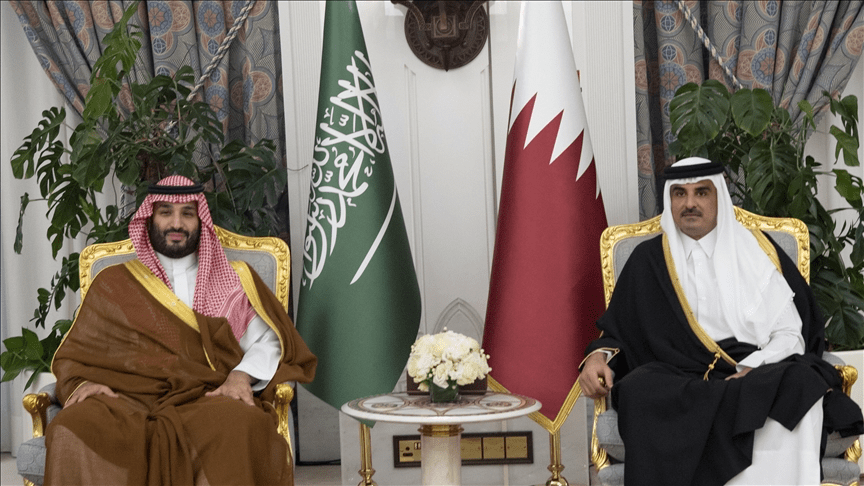
Two major Middle Eastern figures pictured sitting together after discussions on countries relationships – Ajansi
So, what does modern day elite sport know about soft power?
What does modern day sport know about soft power? I would argue quite a lot. I have put forward two examples of the Middle East in two major football events, and from what I have discovered and highlighted, it is clear that these two countries are masters at using soft power. Both countries have come under scrutiny from critics and the media, but the two countries have tried to distract from this by aiming to portray their country as both modern and progressive. As the world of football competes for both appearance and success, the presence of soft power and sportswashing is likely to continue to exist. I leave you with this final point. As the Footballing scene fights to have a positive image, are you at all impacted by the use of soft power and sportswashing?


 Site Title